
It is science week, so we thought we would turn the spotlight on to a few of the scientists who have been members of the Plymouth Athenaeum during the last 209 years.
These scientific stars come from the three founding organisations from which the Athenaeum is formed: the Plymouth Institution (1812), Plymouth Mechanics’ Institute (1825) and the Devon & Cornwall Natural History Society (1838).
Some of them are internationally recognised, like Charles Darwin, some produced pioneering work that saved many lives, such as Sir William Snow Harris. Others, like Alison Wilson, saved rare and endangered flora like the ‘Plymouth Pear’.
Each and every one of them made their mark in science, either internationally, nationally or locally, so here is the lowdown on 30 Athenaeum scientists…

1. Charles Cardale Babington (1808-1895) Botanist and Archaeologist
Charles Babbington overlapped at Cambridge with Charles Darwin and, in 1829, they argued over who should have the pick of beetle specimens from a local dealer. He obtained the chair of botany at Cambridge in 1861 and wrote several papers on insects.
‘Beetles’ Babington, who was a member of the Devon & Cornwall Natural History Society, was elected as a Fellow of the Royal Society in 1851.
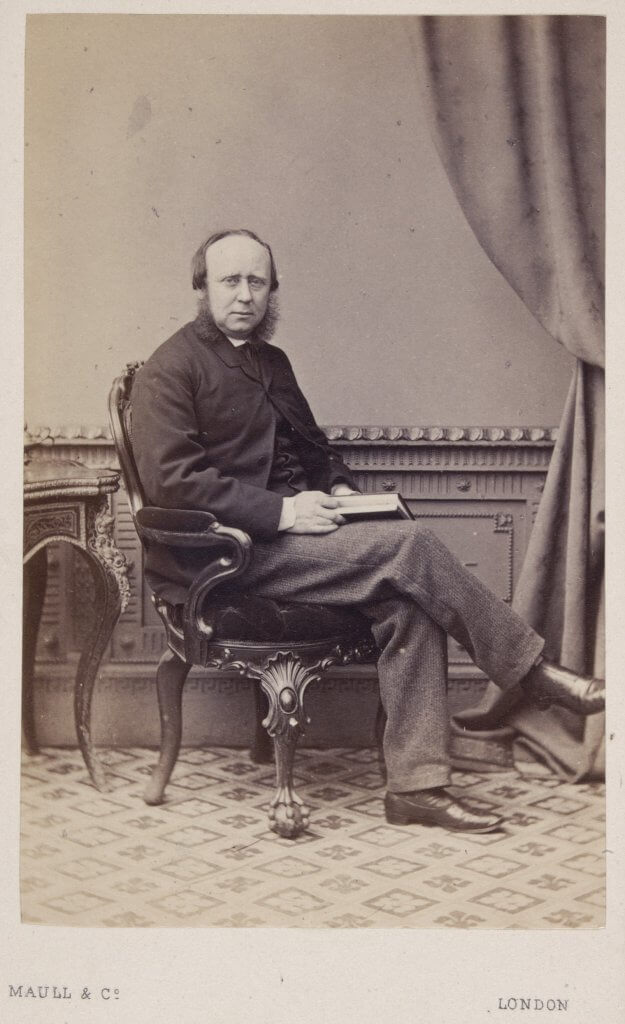
2. Charles Spence Bate (1819-1889) Scientist and Dentist
Correspondent of Charles Darwin, leading authority on Crustacea and one of the country’s foremost dentists, Spence Bate was a Fellow of the Royal Society and the Linnean Society and President of the British Dental Association and the Odontological Society – the first from outside the capital.
He also served as President of both the Devonshire Association and the Plymouth Institution (Athenaeum).

3. Charles William Bracken (1869-1950) Zoologist and Entomologist
Charles Bracken was born in Plymouth and educated at Plymouth Public School where he became a Pupil Teacher in 1882. In 1886 he went to St. Mark’s College, Chelsea and obtained a Teacher’s Certificate. Returning to Plymouth he became successively Assistant Master at Plymouth Public School, Headmaster of Mount Street School and in 1900 Headmaster of the Pupil Teacher’s Centre at Plymouth Technical School. Bracken was elected a Lecturing Member of the Institution in 1901 and contributed many valuable lectures.
His knowledge of zoology and entomology was extensive and in 1906 he was elected a Fellow of the Entomological Society and in the same year he was elected Curator of Invertebrata by the Institution.
He gave many lectures on entomology over the years including the third part of the lecture given in 1943 on the “Natural History of the Rubble Heaps”.
He was elected President in 1916, Secretary in 1920 and elected to Council in 1923/24. He retired from teaching in 1928 and prior to that the subject of his many lectures had been the history of Plymouth and of the Plymouth Institution. Among these lectures had been one on “The Portraits and Pictures in the Plymouth Athenæum”, (1936).
This became especially valuable later on as it listed so much of what was lost in 1941. At the outbreak of war in 1939, which caused the President (J.L. Palmer) to be away from Plymouth, Bracken was appointed Deputy President from September to December 1939. In 1934 he became very active in the Devonshire Association being General Editor of the Transactions for 1935/37 and President in 1940.
In 1927 Bracken published his first book “A History of the Plymouth Public School” and this was followed in 1931 by his “History of Plymouth and her Neighbours”, the book by which he best deserves to be known and remembered. Charles Bracken died in November 1950. He was a member of the Plymouth Institution from 1901 until 1950.

4. William Buckland (1784-1856) Theologian and Geologist
William Buckland, who was born at Axminster in Devon, was a theologian who became Dean of Westminster. He was also a geologist and palaeontologist, writing the first full account of a fossil dinosaur, which he named Megalosaurus. He was praised for demonstrating how scientific analysis could reconstruct events from the distant past.
Early in his career he believed that he had found geological evidence of the Biblical flood, but later became convinced that glaciation provided a better explanation. He played an important role in promoting that theory in Britain.
Buckland was a prominent and influential scientific celebrity and a friend of the Tory Prime Minister, Sir Robert Peel. In co-operation with Adam Sedgwick and Charles Lyell, he prepared the report leading to the establishment of the Geological Survey of Great Britain.
Charles Darwin and Buckland exchanged information and Buckland praised Darwin’s 1837 paper on the Formation of mould as establishing a new ‘geological power’.

5. Charles Robert Darwin (1809-1882) Evolutionary Scientist
The great scientist, Charles Darwin, was a regular visitor to The Athenaeum in October and November 1831 ahead of his five-year voyage of discovery aboard HMS Beagle. Darwin calibrated equipment in the original Athenaeum building’s garden and attended a lecture by William Snow Harris. The Beagle was one of the first trial vessels for Snow Harris’ lightning conductors for ships system, and survived lightning strikes unharmed during Darwin’s voyage.
Darwin socialised with Snow Harris and other members of the Athenaeum during his stay in Plymouth.
Darwin later became a member of the Society and its members – including William Pengelly, Charles Hamilton Smith, Charles Spence Bate, Albert Gunter and Baron Avebury (John Lubbock) – formed part of Darwin’s 19th Century world wide web of information and collection sources.
A naturalist, geologist and biologist, Darwin is best known for his contributions to the science of evolution. His proposition that all species of life have descended over time from common ancestors is now widely accepted, and considered a foundational concept in science.

6. Sir Henry De la Beche (1796-1855) Geologist and Palaeontologist
Sir Henry De la Beche was the first director of the Geological Survey of Great Britain, who helped pioneer early geological survey methods. De la Beche spent his early life living with his mother in Lyme Regis, where he acquired a love for geology.
Years later, after returning to the South West, he began the detailed investigation of the rocks of Devon and Cornwall. Contact with the mining community gave him the idea that the nation ought to compile a geological map of the UK, and collect and preserve specimens to illustrate, and aid in further developing, its mineral industries.
Among their correspondence, Charles Darwin discussed questions about his coral reef theory that were raised by De la Beche.

7. (Sarah) Florence Diggory (1883-1972) Archaeologist and Naturalist
Florence Diggory was the last of the ‘Lady Associates’ of the old Plymouth Institution (now the Athenaeum). Her parents came from Shrewsbury but were living at Corwen, North Wales, when she was born. Her father, a railway inspector, came to Plymouth with his wife and four children in 1895, and here she lived for 65 years, later moving to guesthouses in various parts of Devon.
Trained at Oxford Street Primary School as a teacher, with first-class diplomas, she was for many years Headn1istress of the old High Street school in Stonehouse.
Her interests were local history, natural history and archaeology, and most of all Dartmoor in all its aspects. The latter she knew thoroughly after marathon expeditions with people of the standing of Hansford Worth and C. E. Bracken.
For many years she was the Hon. Treasurer of the Plymouth and District Field Club and was also a chairman of the local branch of the Devonshire Association. She was also a member of the Cambrian Society and the South West Naturalists’ Union.
A former President of the Athenaeum, Mildred Raymond, used to tell her pupils that they should never let their minds grow old; Florence Diggory even into her 90th year fully exemplified this admirable precept.

8. Robert Were Fox (1789-1877) Natural Philosopher and Inventor
Robert Were Fox was born in Falmouth in April 1789. The Fox family were members of the Religious Society of Friends (Quakers), and were descended from members who had long settled in Cornwall, although they were not related to George Fox who had introduced the community into the county.
He is known mainly for his work on the temperature of the earth and his construction of a compass to measure magnetic dip at sea.
Fox made improvements to the dip circle which made it a practical aid for polar navigation. In the 1830s, he developed the first dip circle that could be used on a moving ship.
Alternately known as a dip needle or dip circle, the device is a compass pivoted to move in the plane containing the magnetic field vector of the earth. It will then show the angle which the magnetic field makes with the vertical.
Dip needles measured the angle between the horizon and the Earth’s magnetic field (the dip angle). They were used in surveying, mining and prospecting as well as for the study of magnetism.

9. John Edward Gray (1800-1875) Zoologist
John Edward Gray was Keeper of Zoology at the British Museum from 1840 until 1874. He published several catalogues of the museum collections that included comprehensive discussions of animal groups as well as descriptions of new species. He improved the zoological collections to make them amongst the best in the world.
Frequent correspondent with Charles Darwin, including on the sexual differences in sloths, their work overlapped and influenced each other, particularly on the topics of pigs and Cirripedia.

10. Dr Albert Günther (1830-1914) Zoologist
In 1875 Dr Albert Günther became Keeper of Zoology at the Natural History Museum. In 1877, he was elected a member of the Plymouth Institution. He oversaw the relocation of the Natural History Museum’s collections to its new building in South Kensington in 1883.
Günther never endorsed evolutionary theory. Due to his religious upbringing, he saw the purpose of zoology to be the definition of species. He did not believe theory had a place in zoological investigation. Despite this, Charles Darwin acknowledged parts of the ‘Descent of Man’ owed much to Günther’s work and he greatly influenced Darwin’s fellow evolutionist Alfred Russel Wallace.
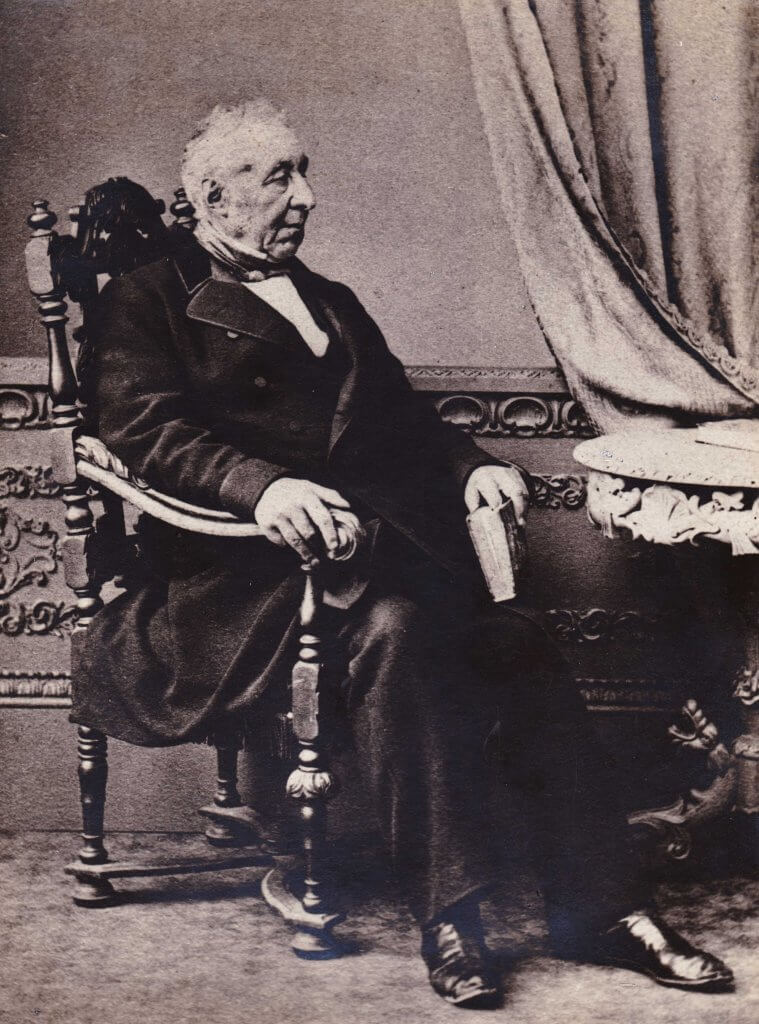
11. Sir William Snow Harris (1791-1867) Electrical Engineer
Sir William Snow Harris was born and educated in Plymouth. After leaving school he went on to study medicine and chemistry. He married in 1824 and the marriage settlement was sufficient to allow him to give up medical practice.
He then spent the rest of his life pursuing his scientific interests in electricity and magnetism. It was his work on lightning conductors for ships that was most significant and to which he devoted a large part of his life.
His theories on conductors were not universally shared and it was not until 1843 that the government recognised Harris’s work and installed conductors on ships. Harris was very active in the Plymouth community where he became a J.P. and was well known in musical circles.
He joined the Plymouth Institution around 1818 where he soon became Curator of Apparatus. He was Vice President three times and President twice, in 1847 – 48 and 1853 – 54. He was knighted in 1847. Sir William Snow Harris was a member of the Plymouth Institution for nearly 36 years.
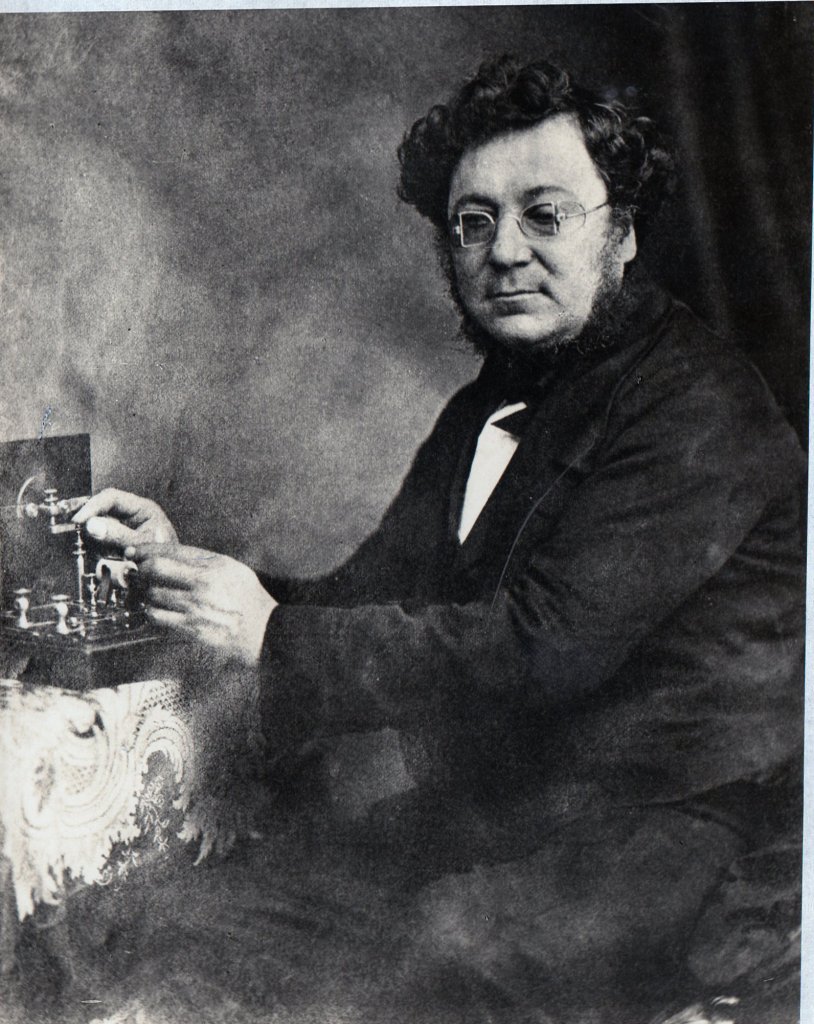
12. Jonathan Nash Hearder (1809–1876) Electrical Engineer
Jonathan Nash Hearder was born and educated in Plymouth, he developed an interest in science at a very early age.
He worked as a school master and was the first master in Plymouth to include science as a school subject. He invented an electrical telegraph and became very well known in the south-west as a lecturer at a very early age. When he was 23 he was blinded while experimenting with explosive compounds but he did not allow this to stop him working.
He had a long association with Snow Harris over the years. He contributed a lot of research into the invention of the induction coil and also advised on the Atlantic cable.
Hearder joined the Plymouth Institution in 1833 and was Curator of Apparatus for many years. He was Vice President from 1857/58 – 1861/2. He was also an active member of the Devonshire Association. He was a member of the Plymouth Institution from 1833 to 1875.

13. Prof. John Stevens Henslow, (1796-1861) Botanist and Geologist
Professor of Botany at Cambridge University, the Reverend John Stevens Henslow is best remembered as a friend and mentor to his student Charles Darwin.
Through this friendship, Darwin learned a great deal about the practice of natural history before he was awarded his BA in April 1831.
It was Henslow, a member of the Devon and Cornwall Natural History Society, who conveyed the letter of invitation to sail with Captain Robert FitzRoy as a gentlemanly travelling companion and ‘scientific person’ or naturalist aboard the survey ship HMS Beagle.

14. Sir William Jackson Hooker (1785-1865) Botanist
Sir William Jackson Hooker was an English systematic botanist and organiser, and botanical illustrator. He held the post of Regius Professor of Botany at Glasgow University, and was Director of the Royal Botanic Gardens, Kew. He was a frequent correspondent of Charles Darwin and his son, Joseph Dalton Hooker, was one of Darwin’s closest friends.
Joseph Hooker was instrumental in creating the device whereby Russell Wallace’s paper on evolution was accompanied by Darwin’s notes and his letter to Asa Gray (showing his prior realisation of natural selection) in a presentation to the Linnean Society. It was Hooker Jr who formally presented this material to the Linnean Society – in the absence of Darwin and Wallace – in 1858.

15. Henry George Hurrell MBE (1901–1981) Naturalist
Henry Hurrell was born in Plymouth, the son of a prosperous corn merchant. Following his education at Plymouth College he graduated from Christ’s College, Cambridge in 1920 in Natural Sciences. From then on his entire life was devoted to the study of the flora and fauna of this country and around the world. For over 40 years he and his wife lived at Wrangaton where he kept a variety of animals which he studied, the most famous being Atlanta the seal. She was the subject of one of his better known books and of several television programmes.
On one occasion members of the Athenæum were invited to Wrangaton to meet Atlanta, a very engaging creature. “H.G.” travelled widely around the world filming many animals in their natural habitat and frequently appeared on radio and television. At home in Devon he served as a J.P. for many years. He and his family were totally committed to Mutley Baptist Church, where he became a Deacon and an Elder. There are several Baptist Churches in the Plymouth area where the name of Hurrell appears on the Foundation Stone! In 1930, at the age of 29, he was appointed President of the Plymouth Institution, the youngest person ever to be so. He enthralled the members with his fascinating lectures on many occasions and in recognition of his service was awarded Honorary Life Membership. He delivered his last lecture in September 1980, 50 years after becoming President.
He was a member of the Plymouth Institution, later the Plymouth Athenæum for over 50 years.
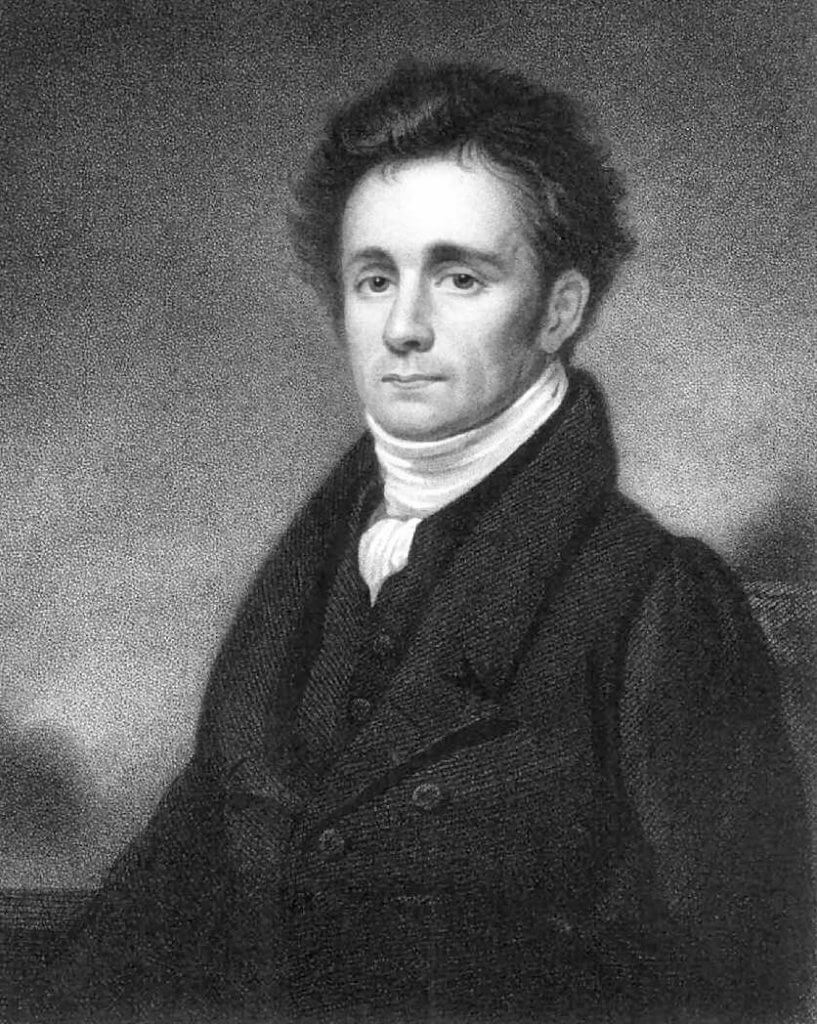
16. Professor Robert Jameson (1774-1854) Naturalist
As Regius Professor of Natural History at the University of Edinburgh for 50 years, Robert Jameson was notable for his advanced scholarship, his superb museum collection and for his tuition of Charles Darwin.
Darwin attended Robert Jameson’s natural history course at the University of Edinburgh in his teenage years, learning about stratigraphic geology and assisting with the collections of the Museum of Edinburgh University, then one of the largest in Europe. At Jameson’s Wernerian Natural History Association, the young Darwin saw John James Audubon give a demonstration of his method of using wires to prop up birds to draw or paint them in natural positions.
17. Dr William Elford Leach (1791-1836) Zoologist and Marine Biologist
Leach was an early Plymouth Institution member. Born at Hoe Gate in the then town of Plymouth, he brought British zoology back to the cutting edge of the subject in the first third of the 19th Century.
Consequently, the next generation of British zoologists were on much firmer ground. The next generation included Charles Darwin and his contemporary evolutionist, Alfred Russel Wallace. Darwin’s correspondence with Charles Spence Bate and fellow Plymouth Institution member, John Edward Gray, among others, contain many references to Leach’s work in the field.
Born in 1791, Leach had been elected as a Fellow of the Royal Society by the age of 25. He worked in the Natural History Department of the British Museum, where he had responsibility for the zoological collections.
But Leach suffered a nervous breakdown due to overwork in 1821 and became unable to continue his researches. He resigned from the museum in March 1822 and his elder sister, Jane, took him to continental Europe to convalesce. They lived in Italy and, briefly, Malta and he died from cholera in San Sebastiano Curone, near Tortona, north of Genoa on 25th August 1836.
If Leach is remembered now, it is for the scientific names of the many species that honour him. In the years up to 1850 alone, 137 new species were named after him: leachii, leachiana, leachella, elfordii, elfordiana and multiple other variants.

18. Dr Marie Lebour (1876-1971) Marine Biologist
Dr Marie Lebour was born in Woodburn, Northumberland on 20th August 1876. She attended Armstrong College and studied art, then went on to Durham University, where she earned degrees in zoology: an associate degree in 1903, bachelor’s degree in 1904, master’s degree in 1907, and then her doctorate in 1917.
While studying for her master’s degree, Lebour was on the staff at Durham University. From 1906–1909, she was a demonstrator in the University of Leeds’ Department of Zoology and from 1909–1915 she was also assistant lecturer.
Lebour joined the research staff at the Marine Biological Association’s Laboratory in Plymouth, where she worked until 1946. She remained an honorary staff member until 1964. Her main research interest was the larval stages of both trematodes (a type of mollusk parasite) and mollusks themselves. She published more than 100 papers on these topics during her career.
She also worked on microplankton, and discovered at least 28 new species, which she catalogued in two books. After publishing these books, Lebour used the newly invented plunger jar to better study the egg and larval stages of krill in the North Atlantic, Antarctica, and Bermuda. She also published well-regarded work on the eggs and larvae of sprat, herring, and pilchards. She also conducted research in West Africa. Lebour, who was a fellow of the Linnaean Society and the Zoological Society, died on 2nd October 1971, at the age of 95.
She served as President of the Plymouth Athenaeum during 1940-41.

19. Sir John Lubbock (1834-1913) Liberal MP and Scientist
Sir John Lubbock, Baron Avebury, made significant contributions in archaeology, ethnography, and biology and was influential in 19th century debates on evolution.
Brought up near Downe, he was a frequent visitor to Down House, becoming the closest of Charles Darwin’s younger friends. Their relationship stimulated Lubbock’s passion for science and evolutionary theory, and he helped Darwin spot crucial errors in his calculations. He introduced the first law to protect the UK’s archaeological and architectural heritage.

20. (Sidney) Gordon Monk (1889–1963) Electrical Engineer
Gordon Monk came to Plymouth in 1919 when he was appointed to the staff of the Plymouth Technical College after War service in the London Electrical Engineers. The following year he was appointed Head of the Electrical Engineering Department of the College, a post he held for 34 years until his retirement in 1954. Mr. Monk had a very distinguished professional career, many highly trained electrical engineers passing out from his department into their own careers. He devoted much time to the professional bodies associated with his own studies but also had the ability and inclination to become involved with the cultural and community life of his new home.
Monk joined the Plymouth Institution shortly after his arrival in Plymouth and very soon commenced the series of lectures which he delivered throughout his long membership. These lectures were very popular because of his ability to explain complicated technical matters in simple language, also because of his use of interesting apparatus and models to illustrate his talks, many of which he had designed himself.
He was a Council Member for some years, and was elected President in 1933 – 35. Prior to 1939 he concentrated on providing facilities in the Lecture Hall to make it suitable for the production of plays. He hoped by this to widen the appeal of the Institution to a larger number of Plymouth people.
After the Blitz in 1941, Monk worked very hard to ensure the survival of the Society and he was one of those responsible for securing the temporary premises in Alexandra Road. He took a prominent part in the planning of the new building and was foremost in pursuing the idea that the new building should contain a theatre. He also asked if space could be provided to exhibit engineering models and offered to meet the cost, which, when later estimated, was £1,000. There is a plaque on the wall of what has always been known as the Monk Room, which reads:- “Plymouth and District Society of Model and Experimental Engineer’s Room, provided and furnished from funds donated by the Society’s Founder President, Sidney Gordon Monk”.
Monk never wavered in his determination that the Institution’s new home would be a worthy one and contribute much to the cultural life of Plymouth.
During his very busy retirement he showed his versatility by editing Volume XXIII of the Transactions and also writing a history of the Baring-Gould family and Lewtrenchard House.
Mr. Monk’s death in 1963 ended an association of over 40 years during which he had devoted an extraordinary amount of time and energy to the life of the Plymouth Athenaeum.
21. Dr Robert Oxland M.A., F.C.S. (1820–1899) Chemist and Metallurgist
Dr Robert Oxland made advancements in the manufacturing of sugar and in the separation of tin and wolfram. Oxland was elected a member of the Chemical Society in 1851 and was one of the earlier public analysts, having been appointed in 1878 at Plymouth and Devonport.
His special work lay chiefly in the domain of metallurgy, in which he devised a wet method for the extraction of copper from ores and a mill for the concentration of cassiterite when associated with metallic sulphides and arsenides. He is chiefly known, however, as the joint inventor with John Hocking of the “revolving calcining furnace” which bears their names.
Oxland was President of the Athenaeum in 1878- 79.

22. William Pengelly (1812-1894) Geologist and Archaeologist
William Pengelly was another of Charles Darwin’s global network of correspondents. Pengelly, whose interests included geology and archaeology, asserted that traditional biblical chronology did not appear to match research he and others had gathered. Pengelly was a regular lecturer at The Athenæum.
In 1861, he advocated the establishment of a local organisation modelled on the British Association for the Advancement of Science but concentrating on Devon and covering all areas of scholarly enquiry. He put the idea to two friends – Spence Bate and Plymouth Institution Curator of Geology, Rev William Harpley, when walking along Millbay Road on a geological excursion. The result was the formation of what would become the Devonshire Association at a meeting at The Athenæum in April 1862.

23. John Phillips (1800-1874) Geologist
John Phillips was an English geologist and member of the Devon & Cornwall Natural History Society. In 1841, he published the first global geological timescale based on the correlation of fossils in rock strata, thereby helping to standardise terminology including the term Mesozoic, which he coined.
Phillips spent time studying the Palaeozoic fossils of Devon, Cornwall and West Somerset, of which he published a descriptive memoir in 1841.
Darwin and Phillips were regular correspondents. In November 1859 Charles Darwin sent a copy of On The Origin of Species to Phillips, but feared he would ‘fulminate anathemas’ against it. Darwin asked him to read it straight through, otherwise it would be ‘unintelligible’.

24. Professor Adam Sedgwick (1785-1873) Geologist and Priest
Adam Sedgwick, who was a member of the Devon & Cornwall Natural History Society, is one of the founders of modern geology, proposing the Cambrian and Devonian periods on the geological timescale.
He guided the young Charles Darwin in his early study of geology in 1831. Darwin accompanied him on a field trip to Wales that summer. The two kept up a correspondence during and after the Beagle voyage.
However, Sedgwick, a firm believer in causation by God’s will, never accepted the case for evolution made in “On the Origin of Species”.

25. Charles Hamilton Smith (1776–1859) Natural Historian
Charles Hamilton Smith was a career soldier, retiring in 1820. From a very early age he sketched and collected information on a wide range of topics including history, zoology, archaeology and topography.
During his military career use was made of his topographical notes of the Ardennes and Canada by the Government which led to him being regarded as a spy in some quarters. On retirement he settled in Plymouth, joining the Plymouth Institution where his lectures made him very well known. Many of Hamilton Smith’s volumes of manuscript notes, letters and papers were deposited in the Institution but sadly were destroyed during World War Two.
President of the Devon & Cornwall Natural History Society, he was initially a Corresponding Member of the Institution becoming a full member in 1833 until his death. He a was Vice President of the Plymouth Institution in 1834-35 and Honorary President 1851-59.

26. Nora Georgina Sproston (1903-1971) Marine Scientist
Nora Georgina Sproston was born in Birmingham and studied at the Marine Laboratory in Plymouth. In 1932, she became an assistant pathologist in London and obtained a B.Sc. in 1938.
She returned to the Plymouth Lab in 1939 and was on the staff until 1947, publishing on parasitic worms and copepods. Sproston’s specialisms were parasitology, helminthology and copepodology. Her greatest impacts were in the study of monogenean trematodes. Her 1946 monograph of this group placed her in the ranks of world specialists.
Sproston lectured at the original Athenaeum a matter of weeks before the building was destroyed during the Blitz. Her topic was ‘Some crustacean parasites of local food fishes’ on Thursday, 13th March 1941, in which she referenced Athenaeum members Charles Spence Bate and Dr Marie Lebour.
Assistant to Miriam Rothschild, later Dame Miriam, in 1946, Sproston was recommended by the MBA Council to succeed Lebour as parasitologist. However, instead, she accepted a post with the Academy of Sciences of China.
Sproston left England for China and was in Shanghai until 1953. She was well regarded, and her opinion held some weight in freshwater fisheries affairs. She published then on planktonic and parasitic copepods.
She was invited to work in India from 1953 until 1957, when she returned to China’s Institute of Hydrobiology until 1962. Due to her associations with China during the ‘Cold War’, she didn’t return to the UK. Sproston went to work in Australia in fisheries and oceanography with the Commonwealth Scientific and Industrial Research Organisation (CSIRO), in Cronulla, studying tuna stomach-contents.
A near-lifetime of inspecting formalin-preserved fishes probably led to a general poisoning of her body, since she was quite ill when she retired in 1968. She died in 1971.
27. John Thomas Towson (1804–1881) Scientist and Photographer
Towson was born at Fore Street, Devonport and educated at Stoke Classical School. He initially followed his father’s trade as maker of chronometers and watches.
When the daguerreotype process was introduced in 1839 he and Robert Hunt spent much time studying the process. It was with the aid of Towson’s article published in the Philosophical Magazine in November 1839 entitled “On the proper focus for the daguerreotype” that the American, John William Draper took the first sunlit picture of a human face in 1840. Towson went on to devise the method of taking a photograph on glass and using the reflecting camera and with Hunt he developed the production of highly sensitive photographic papers.
In 1846 Towson developed an interest in navigation and became an instructor in the Naval Dockyard. Following Towson’s investigations Sir John Herschel persuaded the Admiralty to publish two volumes of his navigational tables. Between 1850 and 1873 he held the post of Scientific Examiner of Masters and Mates at Liverpool. He retired in 1873 still holding the post of Chief Examiner in compasses. In 1853 he spoke to the Liverpool Literary and Philosophical Society on the subject of the deviation of the compass on iron ships.
With the help of William Scoresby he later drew the attention of the British Association to this matter. Shortly afterwards the newly formed Liverpool Compass Committee produced three reports, largely compiled by Towson, which were presented to both Houses of Parliament. In 1857 he was handsomely rewarded for his services to navigation by the Liverpool Shipowners. In 1863 the Board of Trade asked him to prepare a “Manual on the deviation of the compass on iron ships” and in 1870 he prepared a syllabus for examinations in compass deviation which was adopted by the Board of Trade. Although Towson wrote widely on geography and photography it is his writings on navigation for which he is remembered. He died on 3rd January, 1881.

28. Walter Frank Raphael Weldon (1860–1906) Zoologist and Biometrician
Walter Weldon was born at Highgate, London, the second child of wealthy parents. Educated privately he then matriculated at University College, London, with the intention of pursuing a medical career. He was admitted to St. John’s College, Cambridge in April 1878 where he subsequently gave up his medical studies for zoology, obtaining a first class degree in the Natural Sciences Tripos in 1881.
He then moved to the Zoological Stazione in Naples to begin the first of his studies in marine biological organisms. In 1887 Weldon was one of the founding members of the Marine Biological Association station in Plymouth. For the next four years he divided his time between Plymouth and Cambridge. From 1887 Weldon’s work centred around the development of a fuller understanding of marine biological phenomena, concentrating on the relationship between various organs of crabs and shrimps including the Plymouth shore crab.
His studies identified changes in the shore crab after environmental change following the building of the Breakwater which caused the fine china clay brought down by rainy weather from Dartmoor to settle in the Sound. Also the expansion of the Dockyard brought an increase in population and therefore the additional sewage caused pollution of the sea.
In 1890 Weldon was appointed to the Jodrell Chair of Zoology at University College, London. In 1899 he moved to Oxford to take up the Lineacre Chair of Comparative Anatomy. Despite his high offices he continued working on all his various projects up to a week before his early death on 13th April, 1906.
Walter Weldon was a Lecturing Member of the Plymouth Institution for the four-year period he worked at the Marine Biological Laboratory.

29-30. Dr Alison Wilson (1903–1978) & Dr Douglas Wilson (1903–1991) Marine Scientists
There have been some unique members of the Athenæum but Alison and Douglas Wilson were unique in a different way in that they were only the second couple where both the husband and wife held the office of President.
Alison was a keen conservationist, contributing records to the Atlas of British Flora and to a mapping scheme for the Devon Flora. She was responsible for the preservation of the “Plymouth Pear” a tree that could have been lost when its sole habitat in Britain, at Estover, was threatened by industrial development. She was Athenaeum President in 1963 – 64. She died on 2nd October 1978.
Douglas obtained a government grant to study the development of polychaete worms at the Marine Biological Laboratory in Plymouth. In 1928 he was appointed Assistant Naturalist and remained at the Laboratory until he retired in 1969 as Senior Principal Scientific Officer. He was appointed Deputy Director in 1958.
After the war the Wilsons were among those who pushed for the reconstruction of the Athenæum and in 1961 as President he presided over the opening of the building. The Vice President’s badge of office was presented to the Athenæum by Douglas in memory of his wife in 1980.
Douglas Wilson died in December 1991, bringing to an end an association of over 60 years.